
House exterior design: How to make it all work together
Posted:
Edited:
June 9, 2023
June 30, 2026
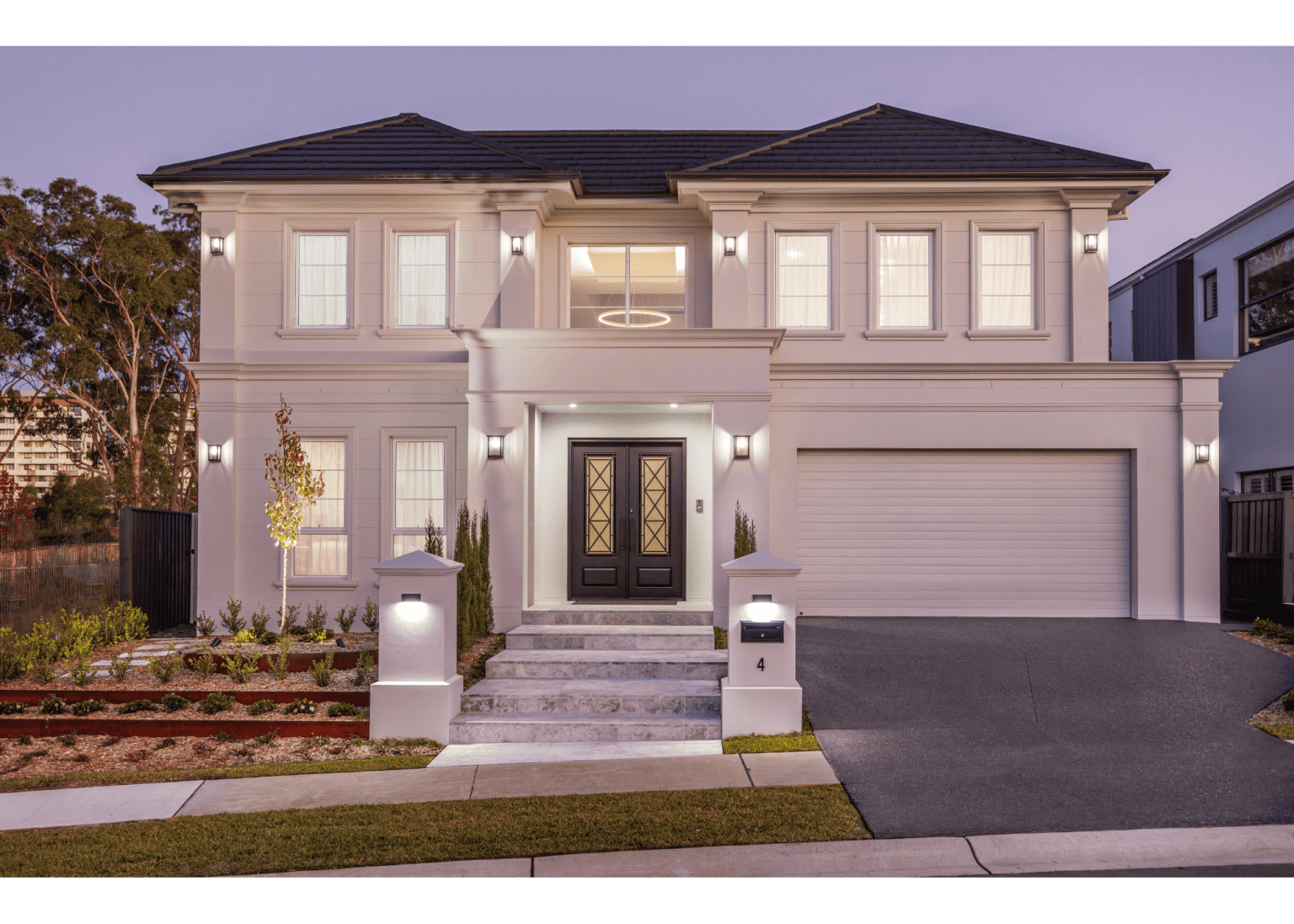
After years of exterior house design across Sydney, I see one pattern more than any other: most homes aren’t really designed, they’re decorated. Clients often call me because they’re stuck. It’s not that they don’t like their house… Most of the time, they like parts of it. The kitchen works, the garden’s nice, the paint colour isn’t terrible, the front door is fine… But still… something still feels off.
When I arrive for a consultation, clients will often point to a specific problem they think needs fixing. The garage door, the render, the windows, the landscaping. And sometimes they’re right.
But just as often, the issue isn’t a single element at all. It’s how everything is working together. That’s one of the biggest differences between decorating a home and designing one. Good exterior house design isn’t about adding more features. It’s about creating a home that feels balanced, comfortable and easy to understand from the moment you arrive.
The difference between designed and decorated
This one isn’t really about budget. I’ve seen modest homes that feel beautifully designed and big-budget ones that look like a list of separate decisions.
A decorated exterior is piece by piece. Each element looks great on its own, but put them all together, and you’ve got a bit of a circus happening with no real connection between the elements. A designed exterior is the opposite. The colours match, the materials repeat. Your eye knows where to go and nothing feels stuck on.
Most of the shift between the two is just in how you’re thinking about it. Once you stop treating each part as its own problem, things start to fall into place.
The role of proportion in house exterior design
One of the most overlooked parts of exterior house design is proportion. Most homeowners don’t walk outside and say, “My proportions are wrong”. Instead, they’re saying, “Something doesn’t look quite right”.
Generally, things are just sitting out of balance.
- A front door that feels too small (or too big) for the scale of the home
- A front door that’s invisible around the side
- A portico that’s oversized and heavy
- A garage that visually dominates the entire frontage
- Columns that are too thin for the roof they’re supporting
Good house exterior design isn’t always about adding something new. Sometimes it’s about adjusting the balance between what’s already there.
When proportions feel right, people usually don’t notice them. When they’re wrong, they’re often the first thing people feel, even if they can’t explain why.
The arrival is more than just the front door
A lot of house exterior design conversations start at the front door, but there’s so much to think about before we even get there.
When a visitor pulls up at your home for the first time, they’re reading a sequence. The gate. The path. The framing of the entry. The lighting. The materials underfoot. Then the door. Each part should reassure them they’re in the right place. We spend a lot of time at the entry – the hellos and the goodbyes – so it’s worth more than a coat of paint on the door.
A few things I look for in a well-designed arrival:
- The eye knows where to go from the kerb
- The house number is easy to see (small thing, big difference)
- The path is lit, so it works at night too
- There are two paths where the home needs them – one from visitor parking, one from the garage
It’s never about a single piece. It’s about the whole walk from the street to the front door, feeling like someone planned it. And as they say, first impressions are everything.
The homes that feel expensive aren’t always the expensive ones
This surprises people. Some of the most impressive homes I’ve worked on haven’t necessarily had the biggest budget – what they did well was consistency.
The materials felt appropriate for the architecture, the scale felt right, and the landscaping was there to support the home, not take away from it. Nothing felt like it had been chosen in isolation.
In other homes, I’ve seen the opposite. Very expensive renovations where every surface became a feature:
- More stone
- More cladding
- More contrast
- More statement pieces
Ironically, that can sometimes make a home feel less refined rather than more. One of the biggest misconceptions in exterior house design is that adding more automatically creates a better result. In reality, some of the most successful homes are surprisingly simple.
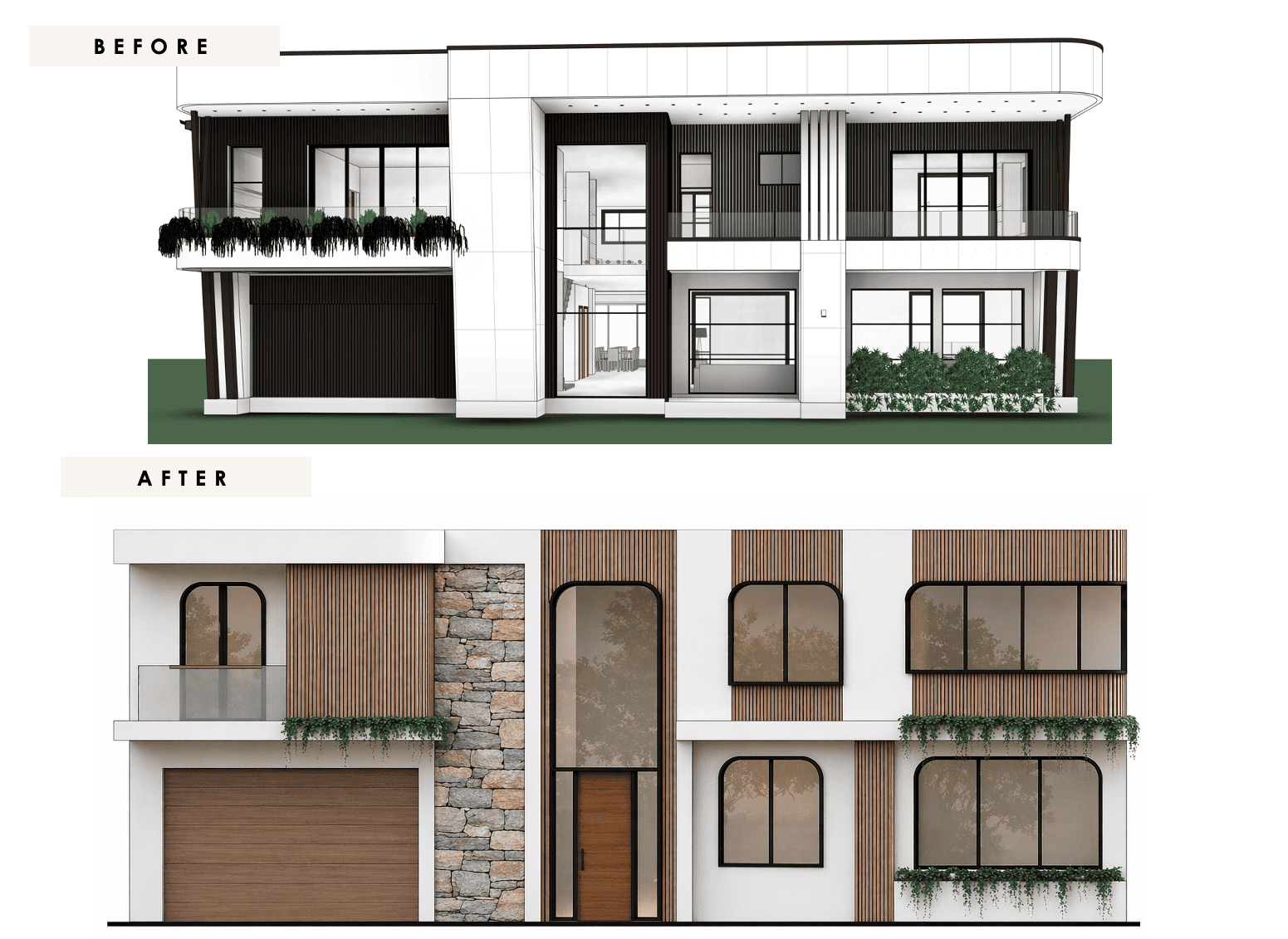
Make the inside and outside feel connected
Your house exterior shouldn’t surprise people when they walk inside. A French provincial facade shouldn’t open into a Hamptons living room. A heavy, moody exterior shouldn’t reveal a soft coastal interior. The shift between the two needs to feel intentional. It doesn’t have to be a perfect match. But the tones, materials and overall feel need to relate to each other.
When I’m working on an exterior, I’ll often pull the inside in – a timber finish that comes back on the cabinetry, a facade colour that connects to the foyer feature wall, stone outside that nods to the kitchen splashback. Nothing has to match exactly. It just needs to feel like one home, especially if you’re looking at resale value. A connected aesthetic is going to look much more impressive on your listing.
Designing for your street and your climate
The two outside factors I always think about are your neighbours and the sun.
Your street
Your home doesn’t have to match its neighbours. But it shouldn’t fight them either. I’ll often walk the surrounding blocks before designing an exterior – looking at the materials, the colour temperatures, the rooflines, the general feel of the street. The goal is something that sits well in its context while still feeling like yours.
A modern minimalist home on a row of Federation cottages can absolutely work. But only when the proportions, trims and colour temperature still speak to the street. Full contrast can make your house stand out, and not always in a good way.
Your climate
Sydney’s a mixed bag – harbour humidity, coastal salt, summer glare, heavy rain, northeasterly winds. Materials and colours need to handle it all.
Light-coloured roofs and walls reflect heat and keep interiors cooler. Worth thinking about as summers get warmer. Darker tones absorb heat but often feel more contemporary. The trade-off is real, and sometimes your council or BASIX requirement will be the deciding factor.
For coastal homes, durability really matters – salt-rated steel, weather-resistant timbers, finishes that won’t chalk in the sun. Check council rules for roof colours and any heritage overlays before you commit. Some Sydney suburbs are stricter than others.
If you’re based outside of Sydney, I’ll always review your local climate and conditions to optimise your exterior design.
When to bring in the professionals
The best time to bring in an exterior house designer is usually before you’ve committed to major decisions. Quite often, clients come to me thinking they need help choosing colours, materials or finishes. What we end up talking about is the bigger picture – how the home feels, what it’s trying to achieve, and where they’ll get the most impact from their budget.
A little planning up front can prevent a lot of expensive changes later.
If you’re considering an exterior renovation, building a new home, or simply want some clarity before making decisions, I’d be happy to help. My exterior design consultations are designed to give you a clear direction and a plan that feels right for your home, your lifestyle and your budget. Get in touch today and let’s make a plan.
Frequently asked questions
I’d start with the architecture you already have. The home’s style, scale and materials are the starting point for every design decision – not a Pinterest board. From there, think about your street, your climate, and how you want the home to feel when you pull up. The right house exterior design works with all three.
Kerb appeal is how your home looks from the street. Exterior design is the thinking that gets it there. One’s the outcome, one’s the process. Good exterior design almost always creates good kerb appeal.
A few of the biggest moves: keep the colour palette simple (three colours maximum, including the roof), repeat materials across the home so things feel connected, refresh dated window frames in a darker tone, and frame the front door properly. Modern doesn’t mean cold – it means cohesive.
For small refreshes and isolated decisions, you can absolutely go it alone. For bigger work – new builds, full renovations, render-and-paint jobs, anything where multiple materials are being chosen at the same time – a designer usually pays for themselves, both in helping you avoid expensive mistakes and in spotting connections you wouldn’t have seen on your own.

Nancy Malekpour-Nisyrios
An award-winning interior designer, Nancy Malekpour-Nisyrios is the Founder and Lead Design Consultant at Design to Inspire. Formerly a senior interior designer for a leading NSW construction company, she’s completed over 100 display homes, winning multiple MBA Excellence in Housing and Housing Industry Association awards.

Meet The Designer
An award-winning interior designer, Nancy Malekpour-Nisyrios is the Founder and Lead Design Consultant at Design to Inspire. Formerly a senior interior designer for a leading NSW construction company, she’s completed over 100 display homes, winning multiple MBA Excellence in Housing and Housing Industry Association awards.